
🏮 Tua Pek Kong Temple — Kuching's Oldest Temple, 250 Years of Fire, War, and Faith
-
Most mornings, the smoke from Tua Pek Kong Temple rises before the Main Bazaar coffee shops open. That is the first sign that this temple lives to a different rhythm than the heritage trail that surrounds it.
Standing at the corner of Jalan Tunku Abdul Rahman, opposite the Chinese History Museum and a two-minute walk from the Kuching Waterfront, Tua Pek Kong Temple — also called Siew San Teng Temple — is widely regarded as the oldest Chinese place of worship in the city. No one knows the exact founding year, but Chinese temple associations and the Wikipedia entry date it before 1839, decades before James Brooke arrived in Sarawak. What started as a simple attap hut for early Hokkien and Teochew settlers grew through major renovations in 1856, 1863 and 1880 into the building you see today.
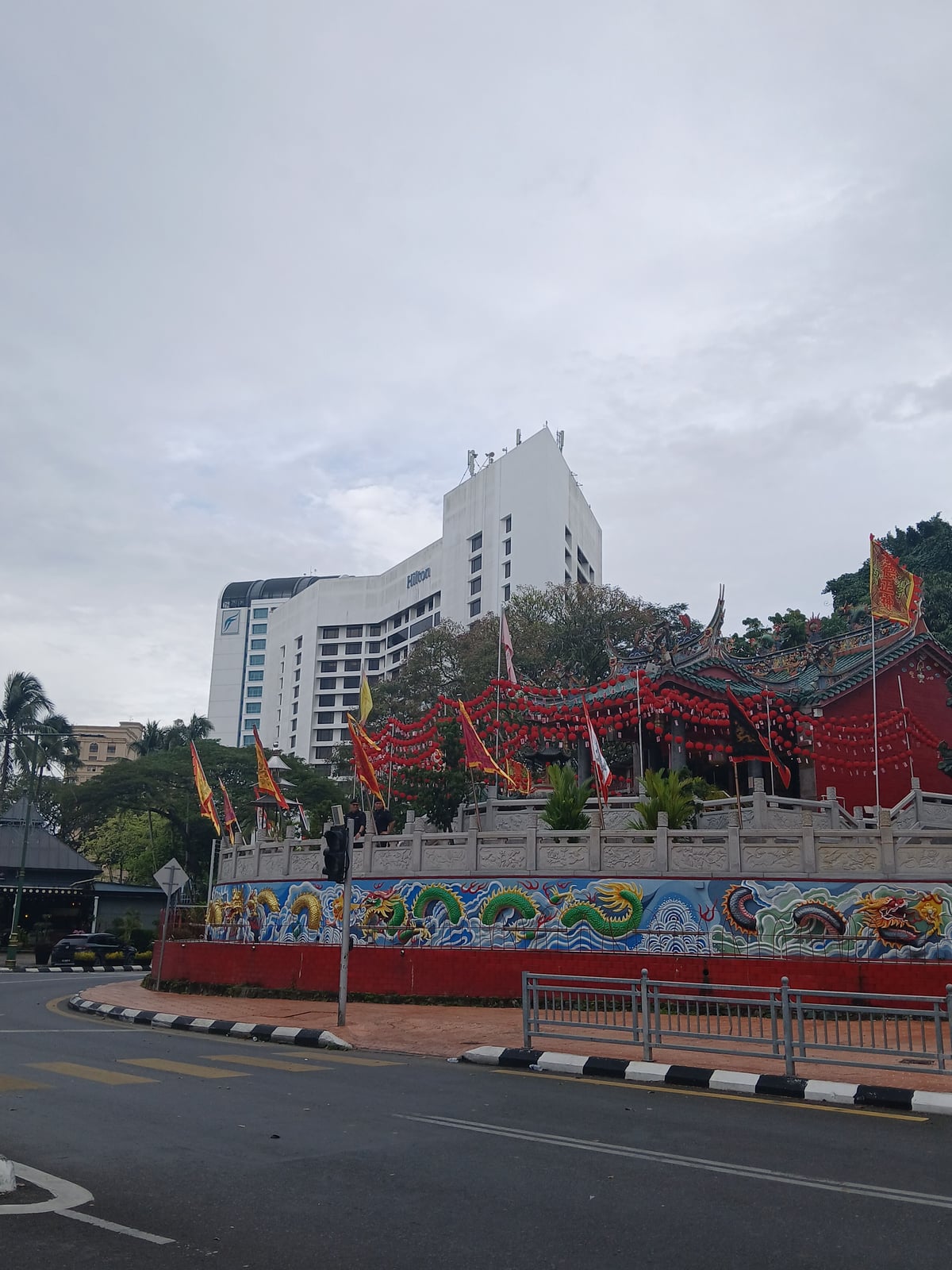
 Credit: 愛子棋枰 / Wikimedia Commons (CC BY-SA)
What gives this temple its near-legendary status among older Kuchingites is what it survived. The Great Fire of 1884 burned most of old Kuching's wooden shophouses to the ground — the temple stood. Japanese bombs fell across the city in 1941 — surrounding buildings collapsed, the temple kept standing. Local folklore credits its feng shui: backed by a gentle hill, facing the Sarawak River, the position was chosen deliberately by the original settlers.
In 1871, the second White Rajah, Charles Brooke, issued the temple's first official land title — a rare recognition of a Chinese religious site by the Brooke administration. The document is still cited by local historians as one of the earliest land grants in Kuching's Chinese community records.
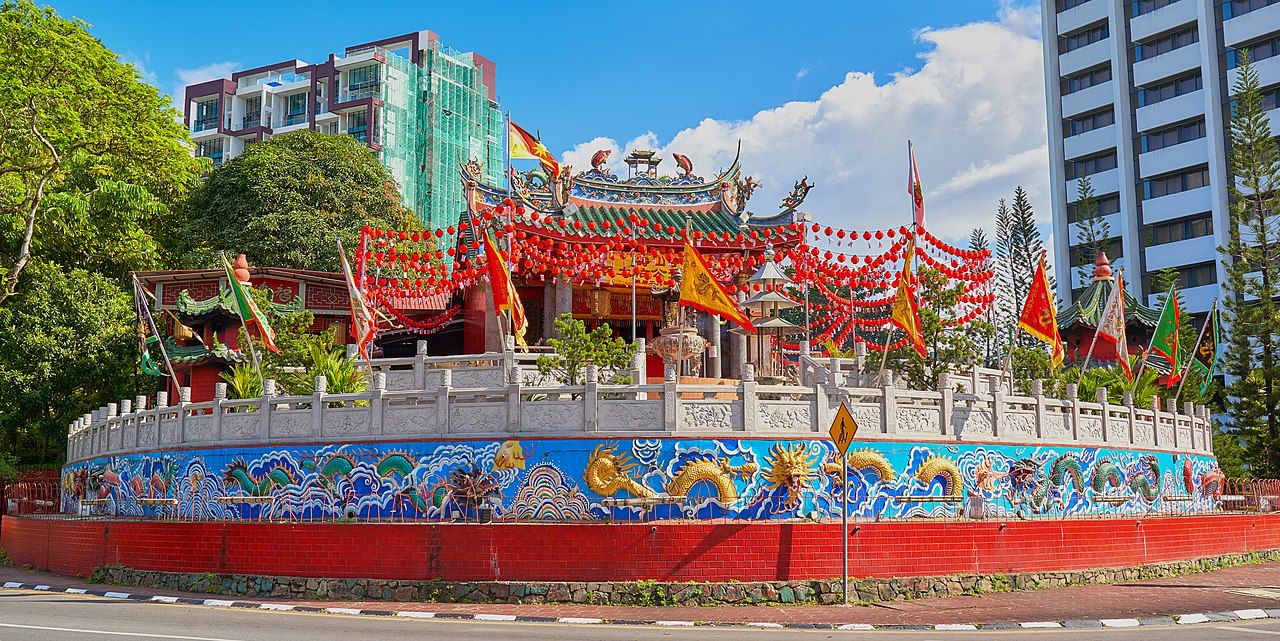
Credit: Damian Pankowiec / Wikimedia Commons (CC BY-SA)The main hall is dedicated to Tua Pek Kong, the God of Prosperity, flanked by Guan Yin and Kshitigarbha bodhisattvas. Business owners from the surrounding shophouses stop by especially on the 1st and 15th of the lunar calendar. You will see them light incense, cast divination blocks and burn joss paper in the courtyard. The temple also used the name Chong Swee Heng (崇瑞兴) in earlier records, a name tied to the Hokkien—Teochew communal trust that managed it.
Inside, the carved wooden altar panels, ceramic roof ridges and red lanterns are not museum pieces — they are maintained by the same families whose grandparents worshipped here. The atmosphere is compact and layered: incense hangs in the air, the divination blocks clatter on the stone floor, and the occasional chant drifts from the side hall.
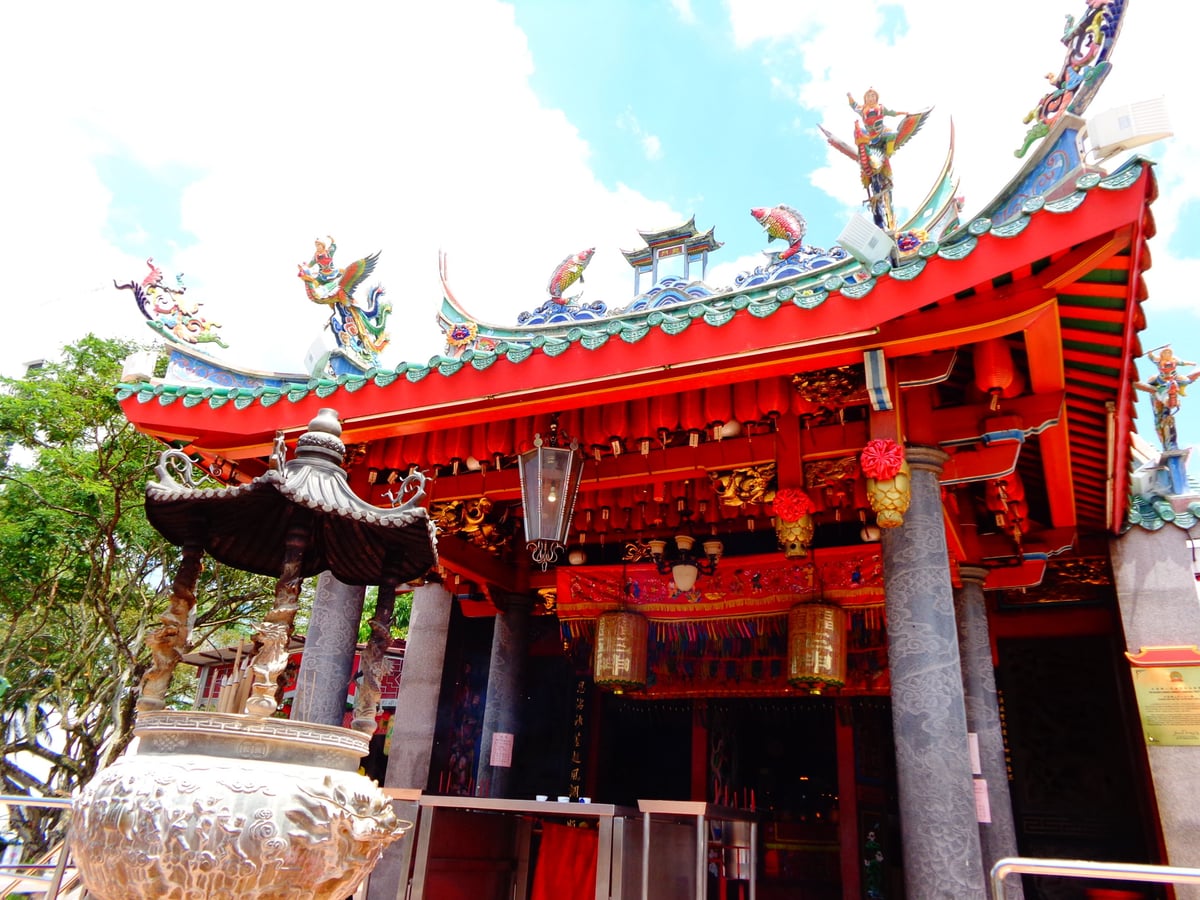
Credit: Boonjinchung / Wikimedia Commons (CC BY-SA)You could walk past the entrance in fifteen seconds. Most people do, heading straight for the waterfront. But ten minutes inside — watching a shopkeeper ask for a blessing, noticing the soot pattern on the incense burner that has not moved in decades — tells you more about Kuching's Chinese community than any museum plaque.
A few practical notes if you do step in. Entry is free and the temple is open roughly from 6 am to 6 pm daily, though there is no strict enforcement. Late afternoon around 5 pm brings good light through the doorway. Dress respectfully — shoulders covered is the norm. Photography is fine, but pause when someone is actively praying. The busiest days are the 1st and 15th of each lunar month; quieter on regular weekdays. The temple sits about 200 metres from the main waterfront path, making it an effortless detour on any old-town walk.
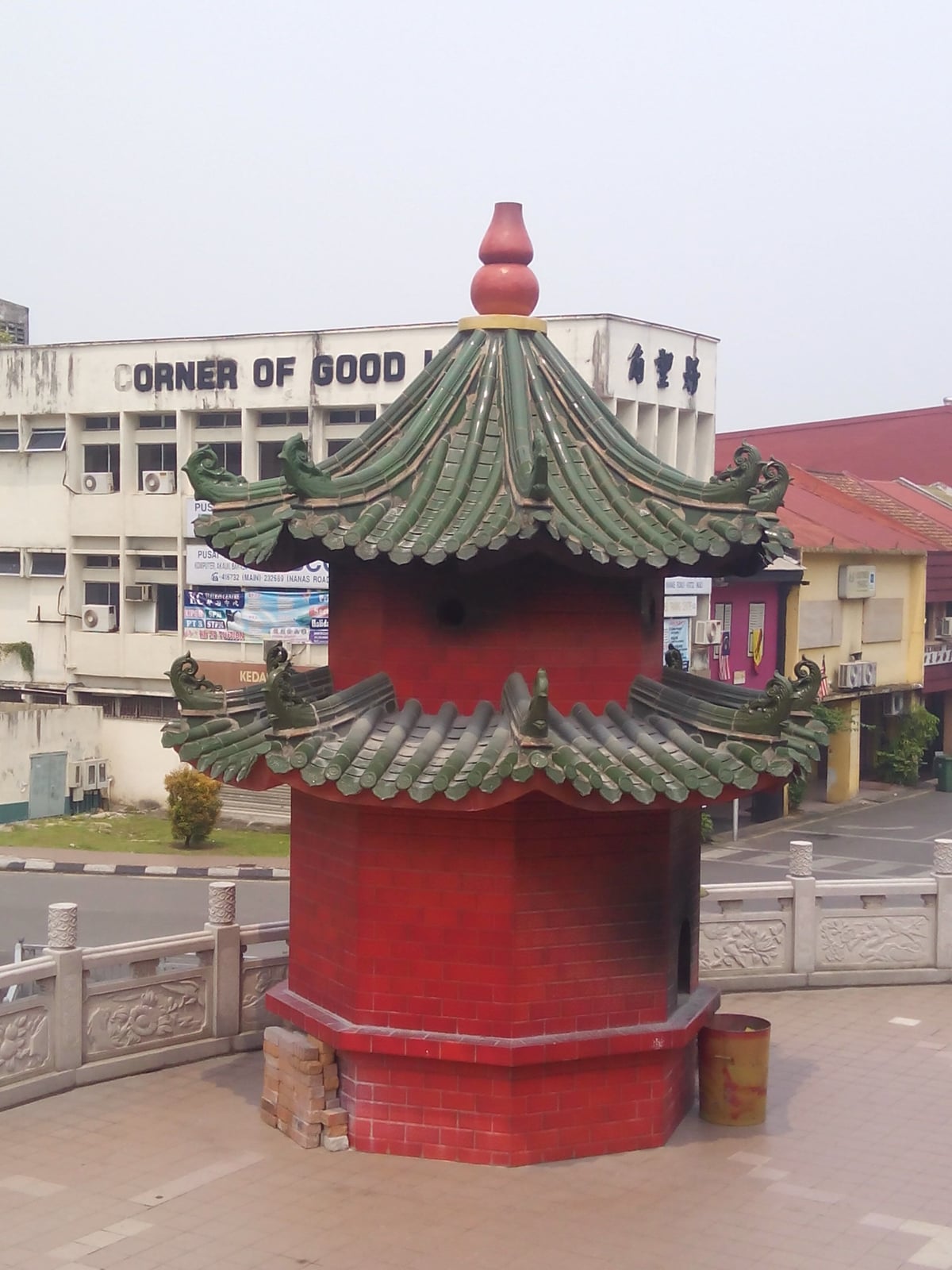
Credit: Flickr / Wikimedia Commons (CC BY)Would this temple stand out if it were in Penang or Singapore? Probably not. But in Kuching, where the oldest surviving Chinese structure shares a block with a 1927 fire station and a colonial courthouse, it anchors the old town's timeline. You don't need 30 minutes here. Ten is enough — long enough to smell the incense and let the history catch up with you.
Hello! It looks like you're interested in this conversation, but you don't have an account yet.
Getting fed up of having to scroll through the same posts each visit? When you register for an account, you'll always come back to exactly where you were before, and choose to be notified of new replies (either via email, or push notification). You'll also be able to save bookmarks and upvote posts to show your appreciation to other community members.
With your input, this post could be even better 💗
Register Login